Why Pilates Still Matters: Practical Benefits, Best Practices, and How to Get Started
Pilates remains one of the most effective, low-impact movement systems for improving core strength, mobility, posture, and body awareness. Whether you’re new to exercise, recovering from injury, or looking to complement weight training and running, Pilates offers scalable progressions and practical results.
What Pilates actually trains
– Core stabilization: Pilates emphasizes the deep abdominal muscles (think transverse abdominis), pelvic floor engagement, and coordinated breathing to create a stable center for all movement.
– Movement efficiency: Exercises train coordination between breath, spine, and limbs, improving everyday functional movement.
– Mobility plus control: Rather than forcing flexibility, Pilates develops range of motion through controlled, strength-focused movement, reducing risk of overstretching.
Mat vs reformer vs props
– Mat Pilates is accessible, effective, and requires little to no equipment. It’s ideal for building foundational control.
– Reformer Pilates adds variable resistance and smooth gliding to challenge strength, balance, and coordination. It’s great for progressing intensity without heavy loading.
– Small props (magic circle, bands, stability ball) add variety and targeted resistance for areas like the glutes, shoulders, and inner thighs.
– Specialty apparatus (Cadillac, chair) offers rehabilitation and athletic performance options, often found in dedicated studios.
Key cues that work
– Breathe laterally: Feel the ribs expand sideways on inhalation and draw down into the abdomen on exhalation. Coordinated breath links movement and core activation.
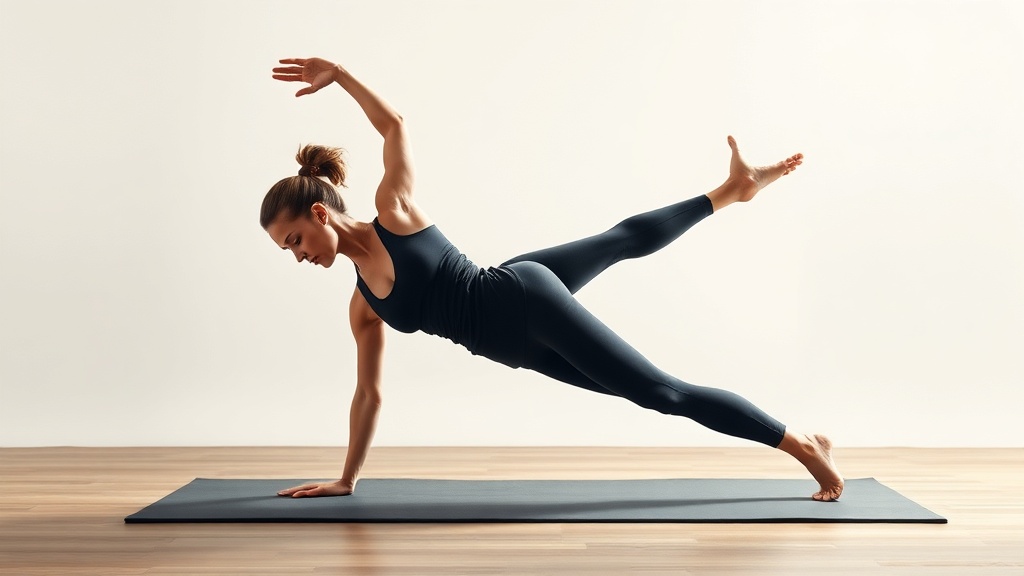
– Think length, not crunch: Create space between vertebrae and articulate through the spine rather than collapsing into repetitive flexion.
– Move from the center: Initiate limb movement with a stable core and imagine energy traveling along the limbs.
– Quality over quantity: Controlled repetitions with full range and clean alignment always outweigh higher reps performed poorly.
Common mistakes and how to avoid them
– Over-bracing: Clenching the abs shuts down the deep stabilizers and creates tension. Aim for firm but elastic support.
– Holding breath: Breath should guide movement; stopping it reduces effectiveness and isolates muscles unnecessarily.
– Rushing progressions: Increasing complexity too quickly invites compensation and injury. Master basic control before adding load or range.
– Neglecting postural balance: Pilates strengthens the posterior chain as well as the front; include exercises that open the chest and activate glutes.
Who benefits most
– Those with desk jobs or rounded shoulders see improvements in posture and upper-back mobility.
– Runners, cyclists, and weightlifters gain resilience and injury prevention through improved core control and pelvic stability.
– People rehabbing minor back issues or recovering from pregnancy find gentle, progressive options.
– Older adults benefit from balance work and low-impact strength that supports independence.
How to choose a class or teacher
– Seek instructors with credible training and a focus on alignment, clear cues, and individualized modifications.
– For beginners, start with a fundamentals or introductory mat class; try a one-on-one session if you need specific guidance or have an injury.
– Consider hybrid options—small-group reformer plus mat—for variety and steady progression.
– Virtual classes work well for consistency; pair them with occasional in-person check-ins to refine technique.
Practical starter routine
– Breathing practice (3–5 minutes): Diaphragmatic lateral expansion with slow exhale to engage the core.
– Pelvic tilts (8–10 reps): Gentle articulation to mobilize the lumbar spine.
– Bridge with march (8–12 reps): Glute activation and pelvic stability.
– Dead bug (8–10 per side): Coordinated core-limb control.
– Spine twist or gentle roll-up (6–8 reps): Rotation and articulation.
Pilates is adaptable, sustainable, and complements other training. Start with mindful consistency, prioritize technique, and build from the core outward to enjoy better movement, less pain, and greater body awareness.