Pilates: Practical Ways to Build Core Strength, Improve Posture, and Move Better
Pilates has evolved from a niche studio practice into a go-to method for people seeking smarter movement, injury prevention, and better posture. Whether you prefer mat Pilates or a reformer class, the practice focuses on mindful movement, breath control, and precise alignment — making it ideal for anyone who spends long hours at a desk, returns from injury, or wants a low-impact way to get stronger.
Why Pilates works
– Core-first approach: Pilates teaches coordinated activation of deep core muscles (transverse abdominis, pelvic floor, multifidus) to support movement rather than simply producing it.
– Breathing and focus: Lateral (rib) breathing enhances stability and oxygenation, while mindful cues reduce tension and promote efficient patterns.
– Joint-friendly strengthening: Slow, controlled movement builds strength and flexibility without high-impact loads, useful for rehabilitation and longevity.
– Posture and movement quality: Emphasis on alignment and balanced muscle engagement helps correct compensations that lead to pain.
Mat vs. Reformer
– Mat Pilates uses bodyweight and small props (bands, small balls) to build strength and control.
– Reformer Pilates adds spring resistance and sliding carriage mechanics for variable load and range of motion.
Many people combine both for variety and progressions.
Common Pilates exercises and modifications
– Pelvic Curl: Lie on your back, knees bent. Imprint and articulate the spine up into a bridge, then roll down. Focus on smooth articulation and glute engagement.
Modification: reduce range if the hamstrings feel tight.
– Plank (Forearm or High): Maintain a straight line from head to heels, draw the ribs toward the hips without tucking. Modification: drop to knees to reduce load.
– Single-Leg Stretch: Classic core exercise focusing on stability through the pelvis. Keep the lower back anchored; avoid rocking.
– Spine Twist (seated): Rotate through the thoracic spine, not the low back. Modification: limit rotation if spinal discomfort arises.
– Leg Circles: Mobilize the hip joint while stabilizing the pelvis. Keep the opposite hip grounded.
Quick 10-minute beginner mat routine (repeat each exercise 6–8 reps)
1.
Breathing and pelvic tilts (1–2 minutes)
2. Pelvic curl (6–8 reps)
3. Single-leg stretch (6–8 reps each side)
4. Modified plank (30–45 seconds)
5. Spine twist (seated, 6 reps each side)
Finish with gentle supine knee-to-chest for release.
Common mistakes to avoid
– Holding the breath; coordinate breath with movement to maintain rhythm and stability.
– Over-reliance on superficial muscles (neck/upper traps) instead of deep stabilizers.
– Excess range of motion that sacrifices control — quality of movement matters more than quantity.
– Skipping progressions; start with basics and add complexity safely.
Practical tips
– Aim for consistency: two to three short sessions per week yields noticeable improvements in mobility and posture.
– Use socks with grip or go barefoot to improve connection to the mat.
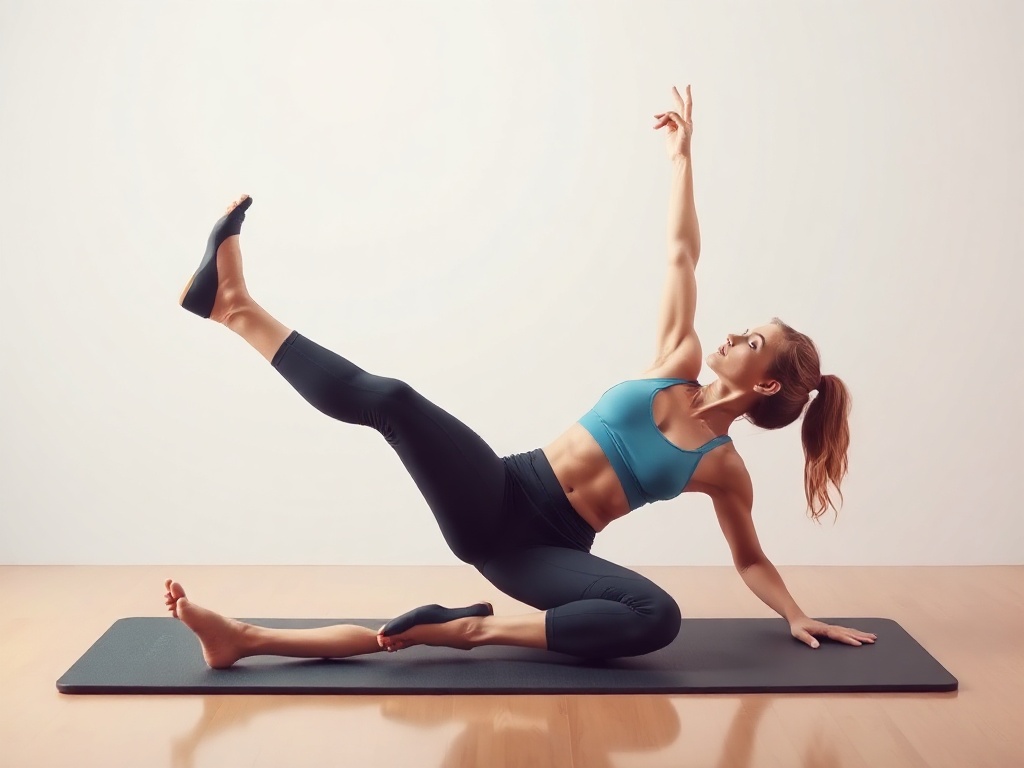
– Work with a certified instructor for personalized cues, especially after injury or during pregnancy.
– Mix Pilates with walking, light cardio, or strength training for a balanced routine.
Pilates is adaptable, progressive, and focused on long-term movement health. Start slowly, prioritize control over speed, and notice how small, intentional changes in alignment and breath lead to big improvements in strength, mobility, and everyday comfort.