Pilates: Practical benefits, trends, and how to get started
Pilates remains a powerful, low-impact movement system that builds core strength, improves posture, and enhances mobility. Whether you’re drawn to mat-based workouts, the reformer’s resistance, or gentle rehabilitative sessions, Pilates offers scalable options for beginners, athletes, and people managing chronic pain.
What makes Pilates effective
– Core stability and breathing: Pilates emphasizes deep abdominal engagement and lateral breathing, creating a stable central support that improves balance and reduces strain on the back and joints.
– Precision and control: Exercises focus on controlled movement patterns and alignment, which helps correct muscular imbalances and fosters mindful movement habits.
– Mobility plus strength: The method blends flexibility with functional strength, supporting everyday activities and athletic performance without bulky muscle gain.
– Rehabilitation-friendly: Many physical therapists integrate Pilates principles to restore movement patterns after injury, especially for the spine, shoulders, and hips.
Popular formats and equipment
– Mat Pilates: Accessible and portable, mat classes use bodyweight and small props (bands, foam rollers, Pilates ring) to create full-body workouts.
– Reformer Pilates: The reformer carriage provides variable resistance through springs, offering precise adjustments for strength, stability, and range-of-motion work.
– Tower, Cadillac, and Chair: Studio apparatus expand movement possibilities for targeted strength and mobility training.
– Hybrid classes: Many studios now blend Pilates with barre, yoga, or functional training to provide varied conditioning and cardio options.
– Online and on-demand: Virtual classes and apps make it easier to maintain consistency; look for live classes or pre-recorded sessions taught by certified instructors to ensure safety and progress.
Who benefits most
Pilates suits a wide range of people: desk workers seeking posture relief, runners and cyclists wanting balanced strength, older adults working on balance, and anyone recovering from movement-related pain.
It’s often recommended for prenatal and postpartum support with appropriate modifications and instructor guidance.
How to start safely
– Seek qualified instruction: Look for instructors with reputable certification and experience adapting exercises for injuries, pregnancy, or specific goals.
– Focus on fundamentals: Learn neutral spine, breathing patterns, pelvic floor engagement, and scapular stability before advancing to complex movements.
– Progress gradually: Start with foundational classes or private sessions, then add equipment-based or higher-intensity sessions as technique improves.
– Listen to your body: Pain, sharp sensations, or joint irritation are signs to modify or stop an exercise. When in doubt, consult a healthcare provider.
Quick beginner session (5–10 minutes)
1. Breathing and imprint: Lie supine, knees bent, hands on ribs. Inhale to expand ribs, exhale to gently draw navel toward spine for five breaths.
2. Pelvic tilts: 8–10 slow tilts to mobilize the lower back.
3. Knee folds: Alternate lifting one foot at a time to the tabletop, keeping core engaged (8–12 each side).
4. Modified bridge: Press hips up into a small bridge for 8–10 reps to activate glutes and posterior chain.
5. Spine stretch forward (seated): Reach forward with long spine for mobility and hamstring lengthening.
Finding the right class
Try different formats to see what matches your goals and movement preferences.
Small-group reformer classes are great for hands-on corrections; mat or online classes suit busy schedules and travel. A few private sessions can fast-track safe technique and personalized progressions.
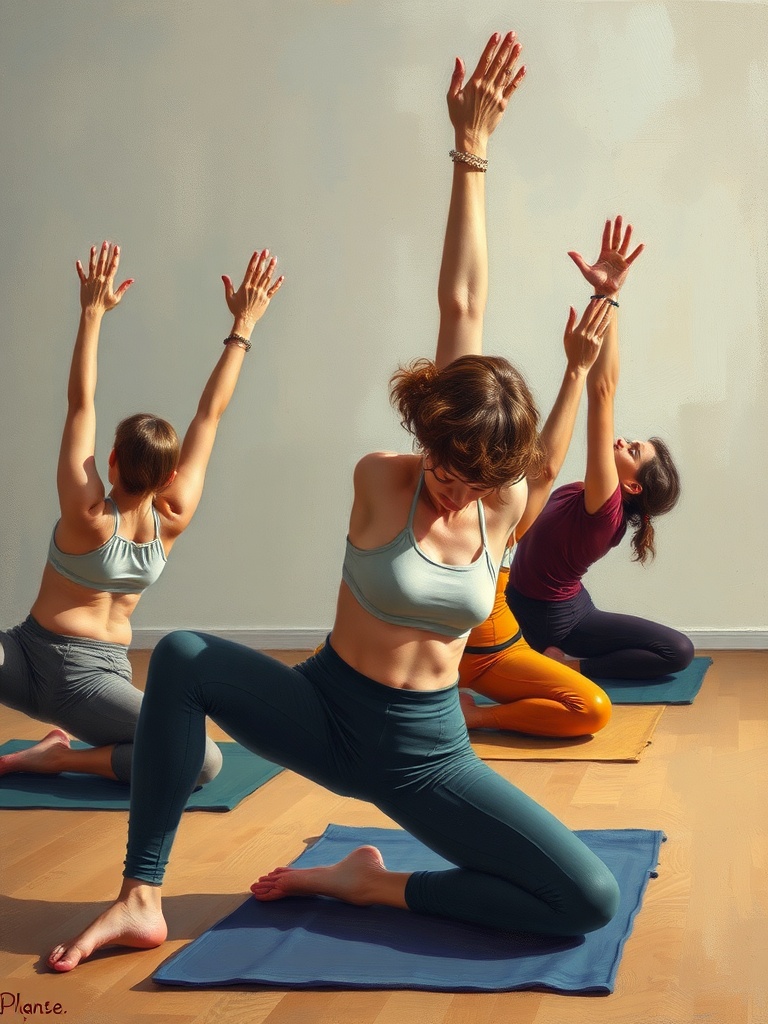
Pilates is a versatile, long-term approach to improved movement and resilience. Start with fundamentals, prioritize quality over quantity, and build a consistent practice that supports daily life and fitness goals.