Creating a workout routine that sticks starts with simplicity, balance, and realistic progression. Whether your goal is building strength, improving cardiovascular fitness, or increasing mobility, a routine that fits your life will produce better results than one that feels like a short-term sprint.
Below are practical principles and a sample weekly layout to help you design a sustainable plan.
Core principles for an effective routine
– Consistency over intensity: Short, regular sessions beat sporadic long workouts. Aim for a frequency you can sustain most weeks.
– Progressive overload: Gradually increase weight, reps, sets, or density to keep making gains.
Small, steady increases are safer and more effective than big jumps.
– Balance: Combine strength training, cardio, and mobility to reduce injury risk and improve overall fitness.
– Recovery matters: Rest days, sleep quality, and nutrition are part of your training. Without recovery, gains stall and fatigue accumulates.
– Movement quality first: Prioritize form and control. Better technique leads to better results and fewer setbacks.
Sample weekly routine for busy schedules
This plan requires minimal equipment (dumbbells and bodyweight) and fits into 30–45 minutes per session.
– Day 1 — Full-body strength (Push focus)
– Warm-up: 5 minutes dynamic mobility (arm circles, leg swings)
– Goblet squat: 3 sets x 8–12 reps
– Push-up or dumbbell bench press: 3 x 6–10
– Overhead press (dumbbells): 3 x 8–10
– Plank: 3 x 30–60 seconds
– Cool-down: light stretching
– Day 2 — Active recovery / mobility
– 20–30 minutes walking, yoga flow, or mobility drills focused on hips, shoulders, and thoracic spine
– Day 3 — Full-body strength (Pull focus)
– Warm-up: 5 minutes dynamic mobility
– Romanian deadlift (dumbbells): 3 x 8–12
– Bent-over row or single-arm row: 3 x 8–12
– Bulgarian split squat or reverse lunge: 3 x 8–10 each leg
– Side plank: 2 x 30–45 seconds each side
– Cool-down: foam rolling or stretching
– Day 4 — HIIT or steady-state cardio
– Option A (HIIT): 20 minutes total — 30 seconds high effort, 60 seconds low effort, repeat
– Option B (steady): 30–45 minutes moderate-intensity activity like cycling, brisk walking, or jogging
– Day 5 — Strength mix + mobility
– Combine compound lifts with mobility work; lighter loads and higher movement quality
– 2 circuits of 6–8 exercises, 8–12 reps each, focusing on full range of motion
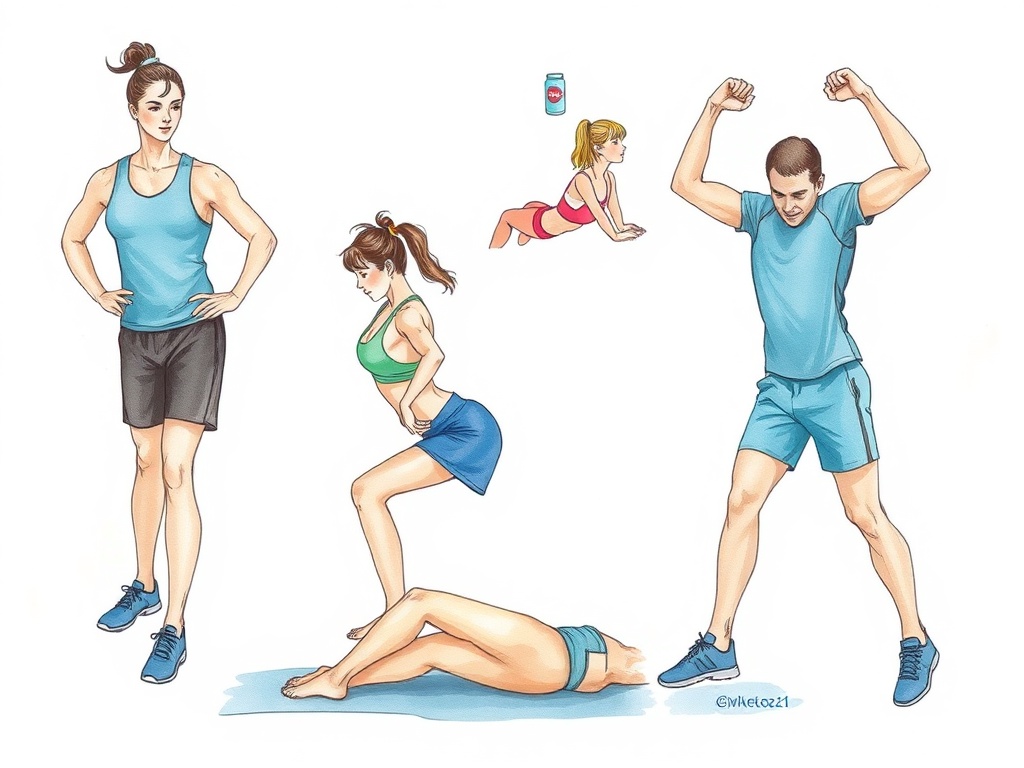
– Days 6–7 — Rest or light activity
– Listen to your body; include a walk, stretching, or restorative yoga
Progression and tracking
Keep a simple training log: exercises, sets, reps, and how you felt. Increase load or reps when you can complete all prescribed reps with good form across sets. If progress stalls, change one variable at a time—more rest, improved sleep, or a deload week.
Nutrition, sleep, and recovery
Support training with adequate protein intake, balanced meals, and consistent sleep. Hydration and timed meals around workouts can improve performance and recovery. If energy is low, prioritize sleep and scale back intensity temporarily.
Common mistakes to avoid
– Jumping into high volume too fast
– Neglecting mobility and warm-ups
– Chasing perfect workouts instead of consistent ones
– Ignoring signs of overtraining like persistent fatigue or declining performance
Start small: pick three realistic workout days, follow the plan for a few weeks, then add volume or intensity.
Small, sustainable habits create lasting results.