Long hours at a desk take a toll: rounded shoulders, tight hips, lower back stiffness, and neck tension are common complaints. Pilates is an effective, low-impact approach to undoing those patterns by rebuilding postural strength, improving mobility, and teaching efficient breathing and alignment habits that transfer to everyday movement.
Why Pilates helps desk-related pain
Pilates focuses on core stability, spinal articulation, scapular control, and coordinated breathing. These principles counteract the slumped posture typical of prolonged sitting by:
– Re-engaging deep abdominal and pelvic-floor muscles to support the spine
– Encouraging thoracic mobility to reduce upper-back stiffness
– Strengthening scapular stabilizers to improve shoulder posture
– Promoting diaphragmatic breathing, which reduces neck and chest tension
Mat Pilates vs. reformer for posture
Both mat and reformer Pilates are effective. Mat work emphasizes mobility and core control using bodyweight; it’s perfect for short home routines between work tasks. Reformer Pilates adds spring resistance to more precisely train alignment and muscle balance, which can be particularly useful if you have longstanding postural habits or want faster progression.
Either approach works — consistency and quality of movement matter most.
Quick, practical exercises for desk workers
These simple moves can be done at home or near your workspace. Focus on controlled breathing, alignment, and smooth movement rather than speed.
1.
Pelvic Curl (5–10 reps)
– Lie on your back with knees bent, feet hip-width. Inhale to prepare; exhale to articulate the spine upward into a bridge, rolling through the pelvis.
Inhale at the top; exhale to roll down vertebra by vertebra.
Cue: imagine stacking each vertebra.
2.
Rib Cage Isolation / Lateral Breathing (1–2 minutes)
– Sit or lie supported. Place hands at the sides of the rib cage. Breathe into the ribs laterally, feeling expansion under your palms while keeping the abdominals engaged. This reduces clavicle/neck breathing and improves thoracic mobility.
3. Thoracic Rotation (6–8 reps each side)
– Sit tall with hands behind your head or extend arms forward. Rotate from the mid-back, keeping the pelvis stable. This targets the often-stiff thoracic spine common in desk workers.
4.
Scapular Squeezes (10–15 reps)
– Sit or stand; draw shoulder blades together and downward without shrugging. Hold 2–3 seconds. This strengthens the mid-back and counters rounded shoulders.
5. Cat-Cow with Articulation (8–10 reps)
– On hands and knees, articulate the spine through flexion and extension. Move slowly, taking your breath with the movement to improve spinal awareness and mobility.
Short daily routine and weekly plan
– Micro breaks: 3–5 minutes every 60–90 minutes to perform breathing and scapular exercises
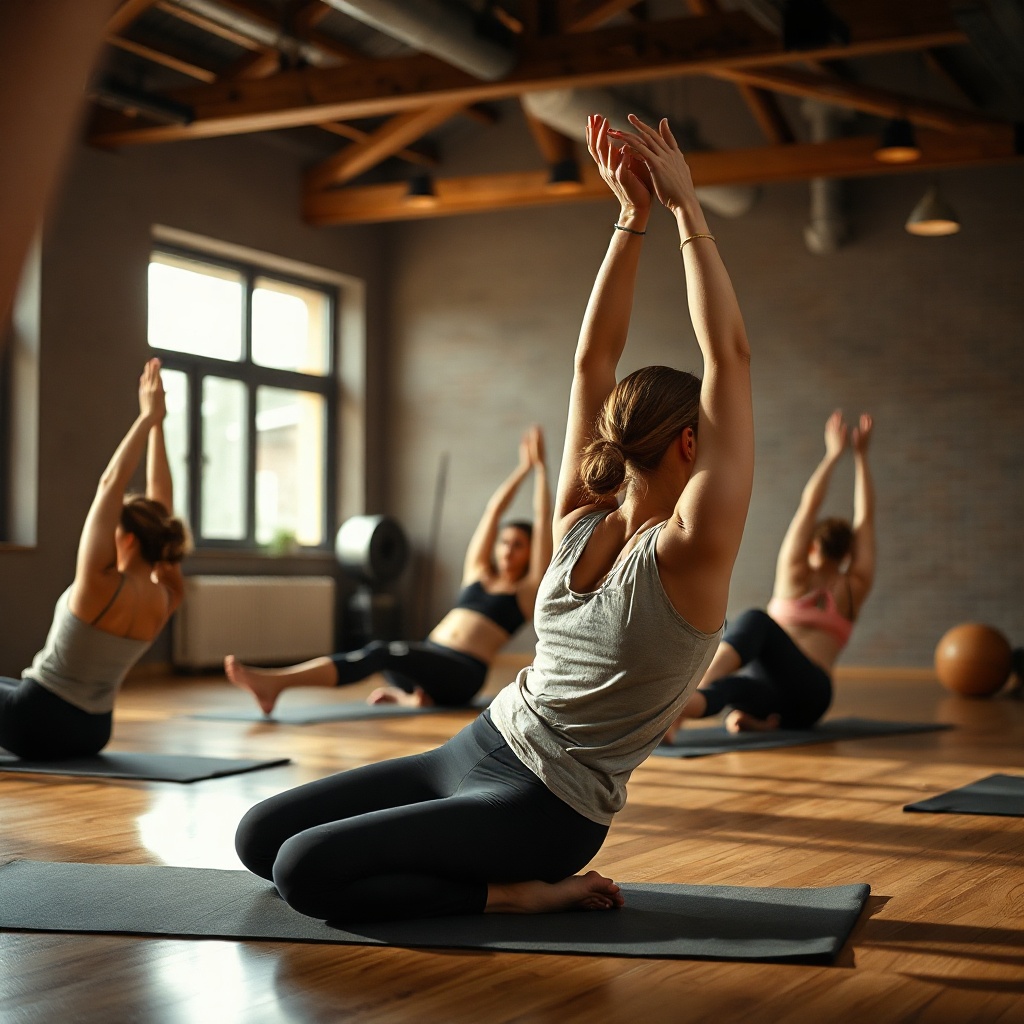
– Short afternoon mobility: 10–15 minutes including pelvic curls, thoracic rotations, and cat-cow
– Full Pilates session: 1–3 sessions per week (20–60 minutes) to build strength and endurance
Safety and progressions
Start gently if you have pain; prioritize neutral pelvis and avoid holding the breath. If you experience sharp or worsening pain, consult a healthcare professional before continuing.
Consider a few sessions with a certified Pilates instructor to learn personalized alignment cues and safe progressions. Reformer work or props like resistance bands and small Pilates balls can be added gradually to increase challenge.
Consistent micro-practice transforms sitting habits into resilient posture and movement patterns. Even brief, focused Pilates sessions scattered through the workday will reduce tension, increase energy, and strengthen the supportive system that keeps you moving comfortably beyond the desk.