Smart Workout Routines That Fit Real Life: Simple, Effective, Sustainable
Designing a workout routine that sticks is less about chasing the latest craze and more about matching structure to your life, goals, and recovery. Whether the aim is building strength, losing fat, improving endurance, or moving pain-free, smart programming balances consistency, progressive overload, and recovery.
Core principles that always work
– Progressive overload: Gradually increase weight, reps, sets, or intensity so your body keeps adapting. Small, steady increases win over sporadic big jumps.
– Compound movements first: Squats, deadlifts, presses, rows, lunges and pull-ups deliver the most return on time by working multiple muscle groups.
– Movement quality: Prioritize technique and joint-friendly ranges; tempo and full range of motion matter more than ego lifts.
– Recovery equals gains: Sleep, nutrition, hydration, mobility work, and strategic rest days are non-negotiable for progress.
– Consistency over intensity: A moderate plan you can follow for months is better than an extreme plan you quit after a few weeks.
A practical weekly framework (scalable)
This example suits many goals and can be adjusted—use lighter loads and higher reps for endurance, heavier loads and lower reps for strength.
– Day 1 — Strength (Lower focus)
– Warm-up: 5–8 minutes cardio + dynamic mobility
– Main: Back squat or goblet squat 3–5 sets x 4–8 reps
– Accessory: Romanian deadlift 3 x 6–10
– Single-leg: Walking lunges 3 x 8–12 per leg
– Core: Plank variations 3 x 30–60 sec
– Day 2 — Upper push/pull (Strength + hypertrophy)
– Warm-up: band pull-aparts, shoulder mobility
– Main: Bench press or push-up progression 3–5 x 4–8
– Row: Bent-over or single-arm row 3 x 6–10
– Shoulders: Overhead press 3 x 6–10
– Finish: Face pulls + triceps or biceps 2–3 x 12–15
– Day 3 — Active recovery or low-intensity cardio
– 20–40 minutes brisk walk, cycling, or mobility flow
– Day 4 — Full-body metabolic/HIIT (time-efficient)
– 20–30 minute EMOM or circuit: kettlebell swings, jump squats, push-ups, rows, short rest
– Aim for work intervals that challenge but don’t form-break
– Day 5 — Posterior chain and mobility
– Deadlift variation 3–5 x 3–6 (moderate-heavy)
– Hip hinge accessories, glute bridges, hamstring curls 3 x 8–12
– Mobility and foam rolling 10–15 minutes
– Day 6 — Optional recreational activity or HIIT
– Day 7 — Full rest or active recovery
Time-efficient options
When time is tight, use 20–30 minute circuits, Tabata intervals, or EMOMs. A compact full-body workout 2–3 times per week can still deliver strength and conditioning if you push with intent and track progression.
Recovery and habit tips
– Prioritize sleep and protein: Aim to distribute protein across meals to support repair.
– Track progress: Use a simple log to note weights, reps, and perceived exertion.
– Periodize: Cycle intensity with a lighter “deload” week every 4–8 weeks to avoid burnout.
– Mobility is performance: 10–15 minutes of targeted mobility improves lifts and reduces pain.
– Be flexible: Life will interrupt plans. Swap sessions rather than skip weeks entirely.
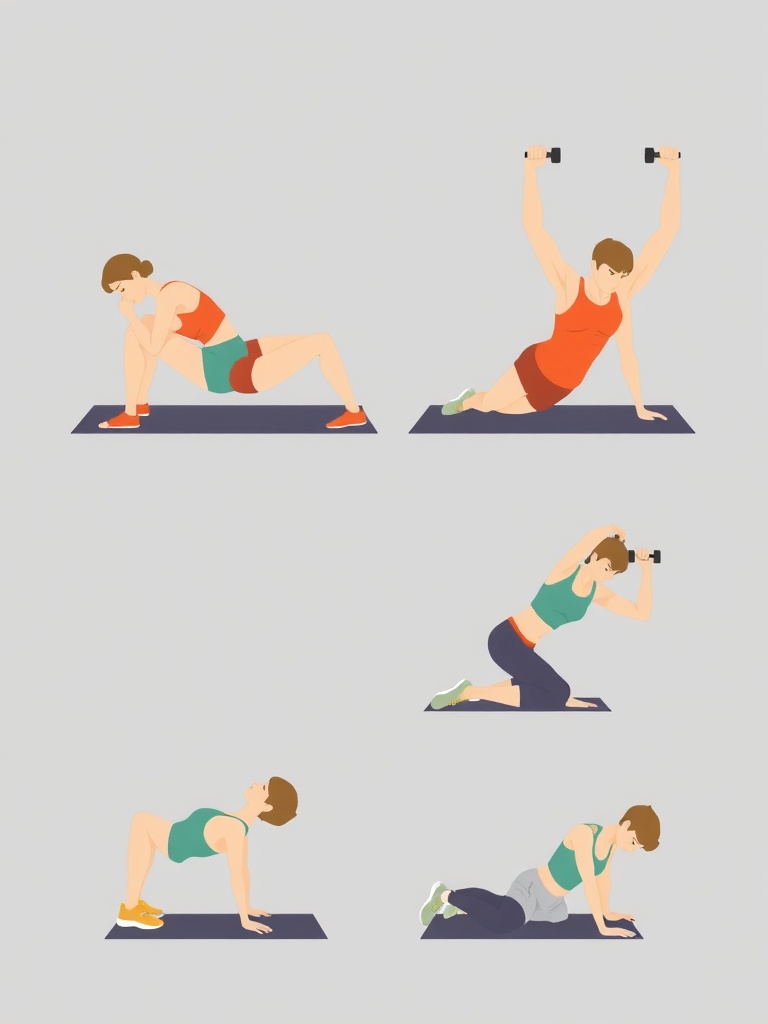
Where many people go wrong
Chasing constant novelty, ignoring recovery, and skipping progressive tracking are common pitfalls.
A modest, well-structured plan followed consistently will produce better results than frequent program hopping.
Start with realistic frequency, prioritize compound lifts, and build recovery into the routine. Over time, small, sustainable improvements compound into substantial fitness gains.