Choosing the right workout routine can feel overwhelming, but a few principles make it simple to build a plan that delivers consistent progress, fits a busy schedule, and reduces injury risk. Whether the goal is fat loss, muscle gain, or improved fitness, smart design focuses on frequency, intensity, movement quality, and recovery.
Core principles that matter
– Progressive overload: Gradually increase reps, sets, weight, or density to keep adapting.
Small, consistent increases beat sporadic extremes.
– Movement variety: Prioritize compound movements (squats, deadlifts, presses, rows) for efficiency, and add accessory work for weak points or mobility.
– Balance strength and cardio: Both are important. Strength training preserves muscle and boosts metabolism; cardio improves endurance and heart health. Combine both based on priorities.
– Recovery: Sleep, nutrition, hydration, and active recovery days let adaptations happen and prevent burnout.
Simple routines that work
1) Efficient 3-day full-body plan (great for time-crunched people)
– Frequency: 3 non-consecutive days per week
– Structure: Each session includes one lower-body compound, one upper-body compound, one posterior-chain movement, and 1–2 accessory exercises.
– Example: Squat 3×5, Bench Press 3×5, Romanian Deadlift 3×8, Pull-ups 3xAMRAP, Plank 3x45s
2) Upper/Lower 4-day split (for balanced strength and volume)
– Frequency: 4 days, alternating upper/lower
– Structure: Heavy day (low reps) + volume day (moderate reps) for each upper and lower body
– Example: Upper heavy (3×5 bench, 3×5 rows), Lower heavy (3×5 deadlift, 3×6 lunges), Upper volume (4×8 incline press, 3×10 lat pulldowns), Lower volume (4×10 split squats, 3×12 hamstring curls)
3) Time-efficient 20-minute HIIT (for conditioning and fat loss)
– Structure: Warm-up 3–5 minutes, then 10–15 minutes of intervals (20–30s work, 10–40s rest)
– Exercises: Burpees, kettlebell swings, jump squats, mountain climbers
– Tip: Keep intensity high but maintain form to avoid injury.
Warm-up and mobility
A 5–10 minute dynamic warm-up prepares muscles and nervous system: light cardio, hip hinges, lunges, shoulder circles, and banded pull-aparts. Add targeted mobility work if joints feel tight—hip openers and thoracic rotations are especially useful for lifters.
Progression and tracking
Track weights, sets, reps, and perceived exertion. Use microprogressions—adding 1–2.5% weight or one extra rep when ready. If progress stalls for two to three sessions, consider a deload week or switch rep ranges.
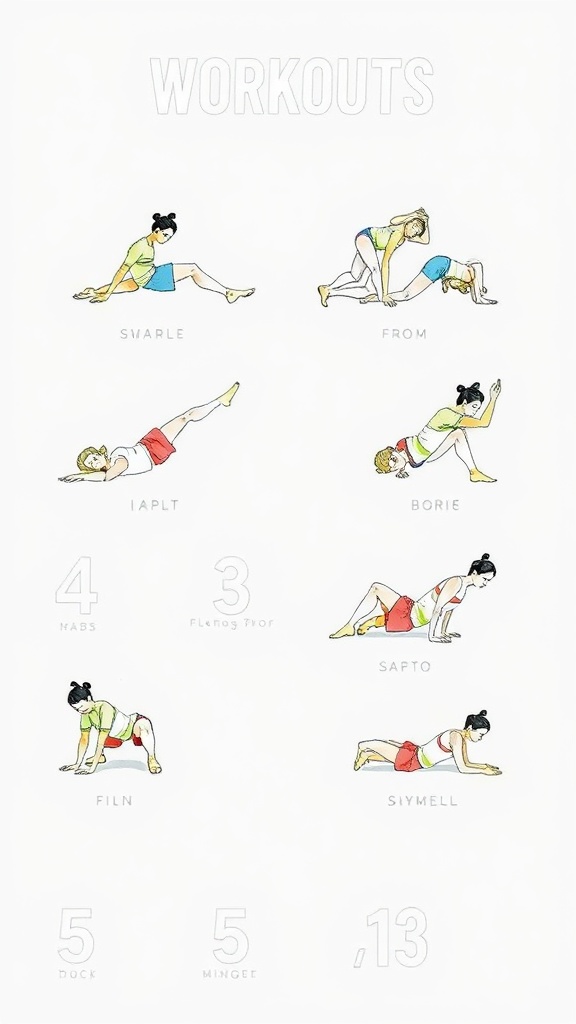
Modifications and scaling
– Beginners: Focus on movement patterns and technique. Use bodyweight or light weights and prioritize consistent practice.
– Intermediates: Start structured progressive overload and add accessory work.
– Advanced trainees: Use periodization, vary tempo, and include specialized phases (strength, hypertrophy, peaking).
Avoid common mistakes
– Neglecting recovery: More training isn’t always better; quality beats quantity.
– Chasing novelty: Constantly switching programs prevents cumulative progress.
– Poor technique under load: Sacrificed form leads to injury and slow progress.
Recovery strategies
Active recovery days, foam rolling, short walks, and mobility sessions help. Prioritize sleep and adequate protein intake to support muscle repair.
Ready to build a plan? Pick a structure that matches time and goals, start conservative with loads, and track progress. Consistency plus gradual progression will create measurable results while keeping training sustainable and enjoyable.