Modern work habits put intense strain on the body and mind — long hours at a desk, constant screen time, and poor posture create neck pain, tight hips, and scattered focus. Yoga offers a practical toolkit for office workers: quick routines that relieve stiffness, restore mobility, and sharpen attention without leaving the workspace.
Why desk-friendly yoga works
Yoga blends movement, breath, and mindful awareness. Short, targeted sequences increase circulation to tired muscles, decompress the spine, and activate the parasympathetic nervous system to reduce stress. When practiced regularly, these mini-sessions improve posture, reduce headache frequency, and support clearer thinking during busy workdays.
A simple 8-minute desk yoga routine
This sequence is designed to be done at a desk or in a small office area.
Move slowly and coordinate each movement with the breath. Repeat each move 4–8 breaths or 3–5 repetitions.
– Neck mobility
– Seated tall, inhale to lengthen the spine. Exhale and drop the right ear toward the right shoulder; hold 4 breaths. Gently roll chin to chest and to the left. Keep movements smooth; avoid forcing.
– Shoulder circles and scapular squeezes
– Inhale, lift shoulders toward ears; exhale, roll them back and down 6 times. Follow with 6 scapular squeezes: draw shoulder blades together and release to counter rounded shoulders.
– Seated cat-cow
– Place hands on knees. On an inhale, arch the chest and tilt pelvis forward (cow). On an exhale, round the spine and tuck the chin (cat). Flow for 6–8 breaths to mobilize the entire spine.
– Chest opener at the edge of the chair
– Sit at the front edge, interlace fingers behind the back, inhale to lift the chest, squeeze shoulder blades together. Hold 4–6 breaths to counteract forward-leaning posture.
– Wrist and forearm stretch
– Extend one arm palm up, use the other hand to gently pull back the fingers, then switch.
Repeat palms down by pressing fingers toward the floor. Helpful for typing-related strain.
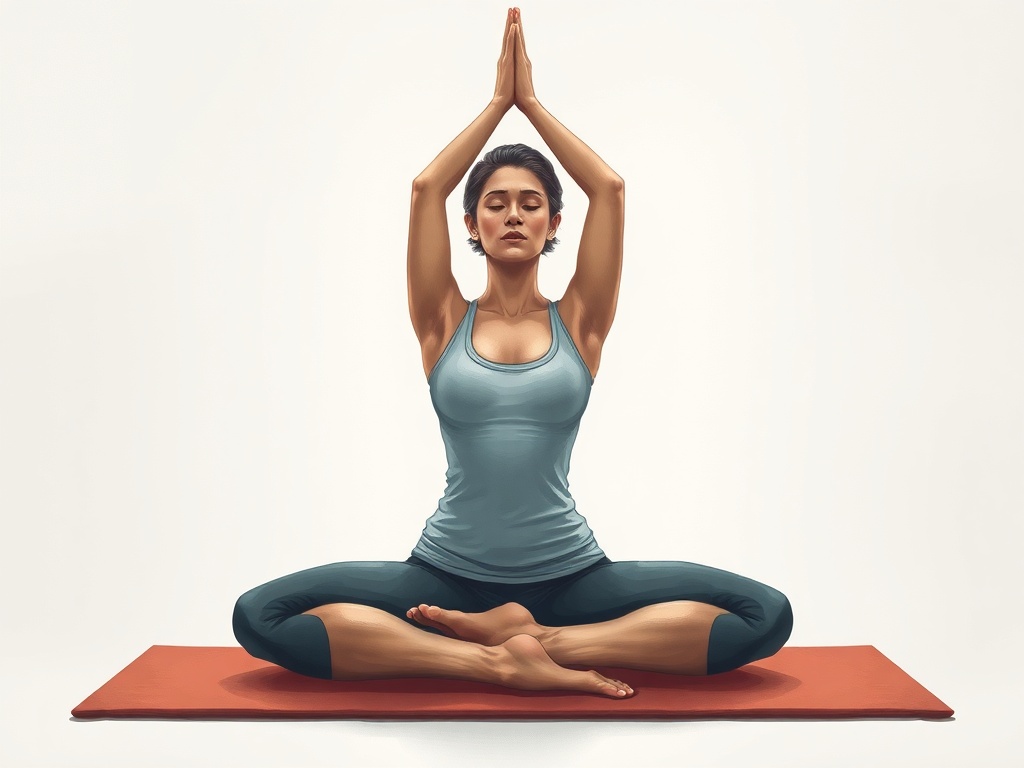
– Seated twist
– Keep hips square; inhale to lengthen, exhale to twist toward the back of the chair, holding onto the backrest for support.
Hold 4 breaths each side to relieve low back tension.
– Standing hamstring stretch and calf release
– Stand, place one heel on a low step or the edge of a chair, fold forward with a straight spine.
Switch sides. This eases tight hamstrings common with prolonged sitting.
– Desk-supported downward dog
– Place hands on the desk, step back until torso is at a 45-degree angle, lengthen the spine and pedal through the heels for ankle and calf mobility.
Breath practices for focus
Short breath techniques reset the nervous system and increase concentration. Try 4-count inhale, 6-count exhale (slightly longer exhale to promote calm) for 1–2 minutes between tasks.
Box breathing (equal counts inhale/hold/exhale/hold) is excellent before difficult meetings.
Modifications and safety
Use a chair without wheels or place a mat for standing poses. If you have specific injuries or chronic pain, adapt movements and consult a healthcare professional. Avoid any pose that causes sharp pain.
Integrating yoga into the workday
Set reminders for micro-breaks: a quick 3–10 minute session every 60–90 minutes yields big benefits over time.
Encourage walking meetings, stretch breaks after long calls, and a consistent short practice each morning or during lunch to create sustainable change.
Small, consistent efforts compound. Even a few minutes of desk-friendly yoga can release tension, restore clarity, and keep the body resilient in a high-demand work environment. Try the sequence today and notice the difference in posture, energy, and focus.