Build a Sustainable Home Yoga Practice: Practical Tips and a Simple Routine
Yoga remains one of the most accessible and effective ways to improve flexibility, reduce stress, and boost mental clarity. A sustainable home yoga practice doesn’t require hours, expensive gear, or perfection—just consistency and simple structure. Here’s a practical guide to creating a routine you’ll actually stick with.
Why a short, consistent practice works
– Small daily sessions create habit strength and reduce the barrier to starting.
– Frequent movement helps prevent stiffness that builds up from sitting and screens.
– A brief practice focused on breath and alignment supports mental balance as well as physical benefits.
Setting up your space
– Choose a quiet corner with enough room for a mat and full body extension.
– Keep minimal props nearby: a mat, a block, a strap (or belt), and a folded blanket.
– Make the space inviting—natural light, a small plant, or calming scent helps cue the brain that it’s practice time.
Timing and frequency
– Aim for 10–30 minutes most days. Morning practice energizes; evening practice helps unwind. If only one is possible, be consistent with that time.
– If motivation dips, commit to a 5-minute mini-session: one posture or breath practice can re-establish habit momentum.
Core elements of a balanced home practice
– Breath: Begin with diaphragmatic breathing or simple three-part breaths to calm the nervous system and connect movement to breath.
– Warm-up: Gentle neck rolls, shoulder circles, and cat-cow to lubricate joints.
– Strength and mobility: Standing postures and lunges build stability; planks and boat pose build core strength.
– Flexibility and release: Hip openers and hamstring stretches reduce tightness from sitting.
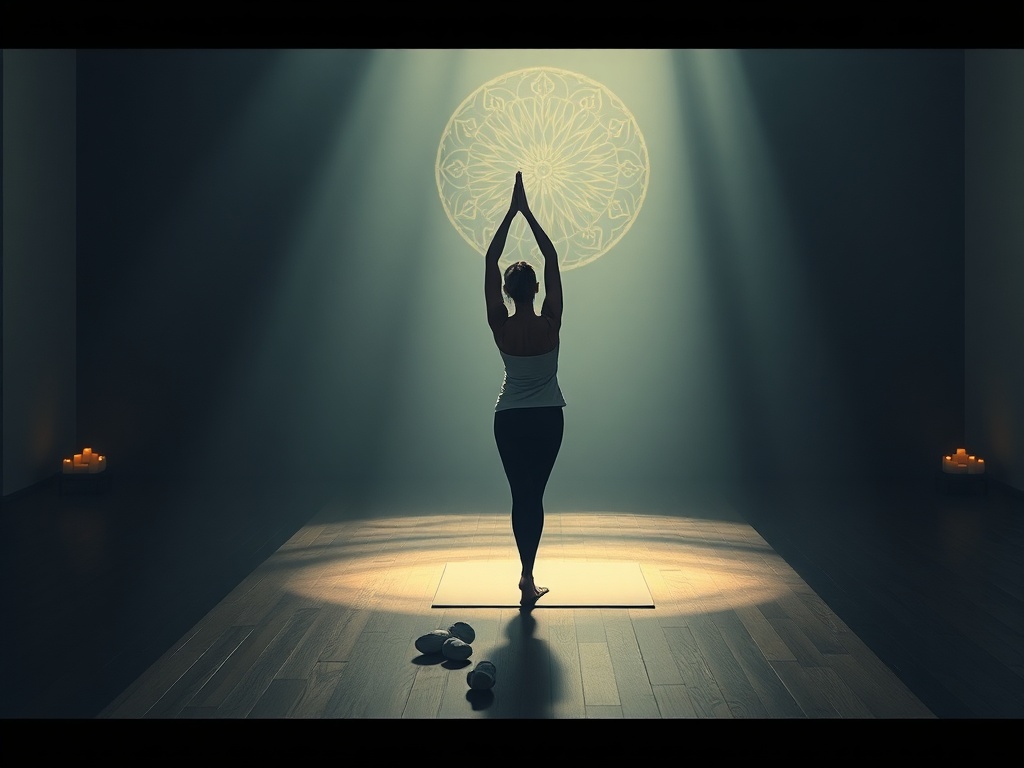
– Relaxation: End with a short guided relaxation or a few minutes of stillness.
A reliable 20-minute routine for any level
1. Centering and breath (2 minutes) — Sit cross-legged or on a block. Inhale for 4 counts, exhale for 6 counts, repeat.
2.
Cat-Cow (1 minute) — 8–10 rounds, linking movement to breath.
3. Downward-facing dog to forward fold flow (3 minutes) — Pedal the feet, then hang forward to release hamstrings.
4. Low lunge with twist (2 minutes each side) — Open hips and twist to wake the spine.
5. Warrior II to side angle (3 minutes each side) — Build strength and balance through the legs and core.
6.
Seated forward fold or supine hamstring stretch with strap (2 minutes) — Soften the back of the body.
7. Reclined twist and hug knees to chest (2 minutes) — Release the lower back.
8. Savasana / guided relaxation (3 minutes) — Allow breath to settle and absorb the practice.
Common mistakes and how to avoid them
– Trying to copy advanced poses: prioritize joint-safe alignment over depth.
– Skipping breath work: breath controls intensity and reduces injury risk.
– Practicing without a plan: following a short scripted routine increases consistency.
– Expecting immediate flexibility changes: progress comes from regular, mindful practice.
Progressing safely
– Add one or two minutes per week or introduce one new posture each month.
– Use props to support alignment rather than force range, especially in hips and shoulders.
– Seek occasional guidance from a qualified teacher to refine alignment and avoid bad habits.
Maintaining motivation
– Set a non-negotiable time and treat it like any important appointment.
– Track sessions lightly—consistency beats intensity.
– Celebrate small wins: more ease in a twist, calmer mornings, or better posture at the desk.
A home yoga practice can become a reliable anchor for physical resilience and emotional calm. Start small, keep the structure simple, and let consistency compound into lasting benefits.