Build a sustainable home yoga practice for stress relief and mobility
Yoga today is less about perfect poses and more about accessibility, consistency, and practical benefits: reduced stress, improved mobility, better posture, and clearer focus. With busy schedules and more time spent sitting, a short, intentional yoga routine can make a big difference.
Here’s a practical guide to creating a sustainable home practice that fits real life.
Why a short, regular practice works
– Small, frequent practices build habit and neural pathways better than rare, intense sessions.
– Short sessions are easier to schedule and more likely to be repeated, increasing cumulative benefits.
– Micro-practices—five to twenty minutes—support stress regulation through breath and movement, and can be added between tasks or before bed.
Choose the right style for your goals
– Gentle/Hatha: steady, alignment-focused; ideal for beginners and mobility work.
– Vinyasa: flowing sequences linked to breath; builds strength and cardiovascular benefit.
– Restorative/Yin: long-held, supported postures for deep relaxation and connective tissue work.
– Chair yoga: accessible for limited mobility or desk workers who need an on-the-spot reset.
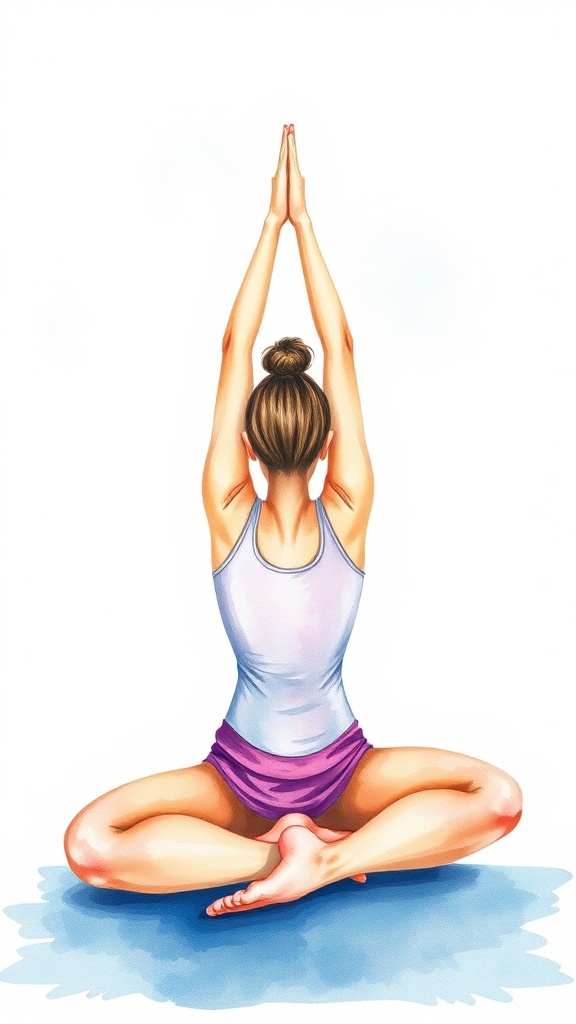
A practical 10–15 minute home sequence
1. Center and breath (1–2 minutes): Sit or stand tall.
Inhale through the nose for a count of 4, exhale for 6. Repeat to calm the nervous system.
2.
Cat-Cow (1 minute): On all fours, inhale to arch the back, exhale to round.
Mobilizes the spine.
3. Downward-facing dog to high plank flow (1–2 minutes): Pedal feet, lift hips, then shift to plank and back. Builds shoulder and core stability.
4. Low lunge with chest opener (1 minute per side): Step right foot forward, lower left knee, interlace fingers and reach up to open shoulders and hips. Breathe into tight areas.
5. Warrior II to side angle (1 minute per side): Strengthens legs and improves hip mobility.
6. Seated twist (30–45 seconds per side): Lengthen the spine, rotate gently to wring out the torso.
7.
Forward fold or supported child’s pose (1–2 minutes): Release hamstrings and the lower back.
8. Savasana or supported relaxation (2–5 minutes): Lie or sit with eyes closed, soften the breath.
Use a pillow under knees for lower-back comfort.
Modifications and props
– Use a chair for standing balance or replace kneeling poses with seated versions.
– Blocks and straps let beginners access full expression of poses safely.
– A bolster or folded blankets make restorative poses more comfortable and effective.
Safety and smart progression
– Prioritize breath over depth of stretch.
If breath becomes short or strained, ease back.
– Progress intensity gradually: increase hold times or add more dynamic flows as mobility and stamina build.
– Consult a healthcare provider for chronic conditions, recent surgeries, or pregnancy. Avoid forcing joints into ranges that cause sharp pain.
Structure for consistency
– Aim for a daily micro-practice of 5–15 minutes, plus longer sessions twice a week if possible.
– Anchor practice to an existing habit—after morning coffee, before bed, or during a lunch break—to make it stick.
– Track small wins: note energy, sleep quality, or reduced stiffness to reinforce the habit.
Integrate breath and mindfulness
– Breath is the most efficient tool for stress relief—use slow, longer exhales to activate the parasympathetic nervous system.
– Bring curiosity to sensations instead of judgment. That mindset shift is as valuable as any pose.
Start small, be consistent, and let the practice grow with your needs. Try the 10–15 minute sequence today and adjust it to match energy levels and schedule—sustainable practice wins over perfection every time.
