Yoga remains one of the most accessible and effective tools for improving mobility, reducing stress, and building mental resilience.
It’s adaptable to any fitness level, whether the goal is to increase flexibility, manage chronic pain, calm a busy mind, or add balance and strength to an existing routine.
Why yoga works
Yoga combines mindful movement, breath control, and focused attention. That trio helps lower the stress hormone response, improve heart-rate variability, and promote better sleep. Physically, regular practice gently lengthens tight muscles, strengthens stabilizing muscles, and improves joint range of motion. Mentally, the breath-focused aspects of practice create a reliable anchor that reduces reactivity and enhances clarity.
Popular styles and when to choose them
– Hatha: Gentle-paced and pose-focused — ideal for beginners or anyone seeking a steady introduction.
– Vinyasa: Movement synchronized with breath; a flowing practice that builds strength and heat.
– Yin: Slow, long-held passive stretches that target connective tissue and encourage deep relaxation.
– Restorative: Support-based poses held for extended periods to promote nervous system down-regulation.
– Power/Ashtanga: More vigorous, strength-oriented classes for those seeking a challenge.
Simple breath practices to start with
– Diaphragmatic breathing: Breathe deeply into the belly, allowing the ribcage to expand. Aim for slow, steady inhales and exhales.
– Box breath: Inhale for a count, hold for the same count, exhale for the count, hold again. Use small counts to begin and lengthen as comfort improves.
– 4-6 breathing: Inhale for four counts, exhale for six. The longer exhale helps activate relaxation pathways.
A compact 10-minute sequence for busy days
1. Gentle warm-up (1–2 minutes): Neck rolls, shoulder circles, and wrist stretches.
2. Cat-Cow (1 minute): Move with the breath to mobilize the spine.
3.
Downward-Facing Dog (1 minute): Pedal the feet to stretch calves and hamstrings.
4. Low Lunge (1 minute per side): Open hip flexors, sink with the breath.
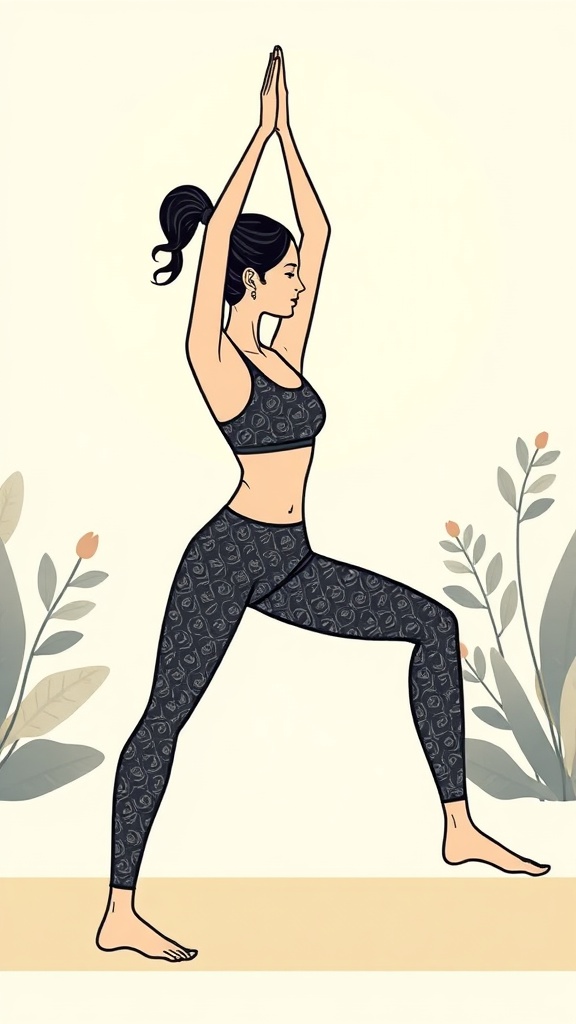
5. Warrior II flow (1 minute per side): Build lower-body strength and balance.
6. Forward Fold (1 minute): Release the back and hamstrings.
7. Bridge pose (1 minute): Lift hips to engage glutes and the posterior chain.
8. Supine twist and Savasana (2 minutes): Reorient the spine and rest.
Common beginner mistakes and how to avoid them
– Forcing depth: Mobility takes time; prioritize alignment over how far into a pose you go.
– Holding the breath: Move with a steady breath.
If you can’t breathe comfortably, ease back.
– Comparing through the mirror or social feeds: Practice is personal; focus on small progressions.
– Skipping props: Blocks, straps, and bolsters help maintain alignment and reduce strain.
– Ignoring pain signals: Distinguish between discomfort from stretching and sharp or joint pain. Modify or stop if pain arises.
Tips for consistency
– Short daily practices often beat sporadic long sessions. Even five to ten minutes builds habit.
– Pair practice with an existing routine — after morning coffee or before bed — to increase adherence.
– Use guided classes (in-person or online) when learning alignment or safely progressing into new poses.
Yoga is a long-game practice that rewards regular engagement with steady improvements in movement quality, stress management, and overall well-being. Start small, move mindfully, and let breath guide the process.