Why Pilates works: a practical guide for beginners and enthusiasts
Pilates is a low-impact, full-body method focused on controlled movement, breath, and alignment.
Whether you’re seeking better posture, rehabilitation after injury, or a stronger core to support other sports, Pilates offers a scalable practice that suits a wide range of fitness levels.
Benefits that matter
– Core strength and stability: Pilates emphasizes deep core muscles (transverse abdominis, pelvic floor, multifidus) that support the spine and improve balance.
– Improved posture and alignment: Regular practice trains the body to stack joints efficiently, reducing neck and back strain from prolonged sitting.
– Increased flexibility and mobility: Controlled stretching and dynamic mobility work help restore functional range of motion without overstretching.
– Mind–body connection: Breath coordination and precise cues sharpen body awareness, reducing injury risk.
– Rehab-friendly: Many physical therapists integrate Pilates principles for recovering from low-back pain, shoulder injuries, and pelvic conditions.
Popular formats: mat vs. reformer
– Mat Pilates: Uses a mat and bodyweight for exercises that build foundational control. Ideal for beginners and home practice.
– Reformer Pilates: Uses a sliding carriage and springs to add resistance, challenge balance, and offer more precise support. Great for progressing strength and rehab work.
– Hybrid classes: Many studios blend props (bands, small balls, magic circles) or add barre elements for variety.
What to expect in a class
A typical session begins with breath and centering, progresses through core activation and limb integration, and ends with full-body lengthening. Instructors cue alignment, tempo, and breathing patterns—learning to move slowly with intention is more effective than rushing through repetitions.
Common mistakes and how to fix them
– Holding breath: Coordinate inhalation and exhalation with movement—this stabilizes the core and prevents neck tension.
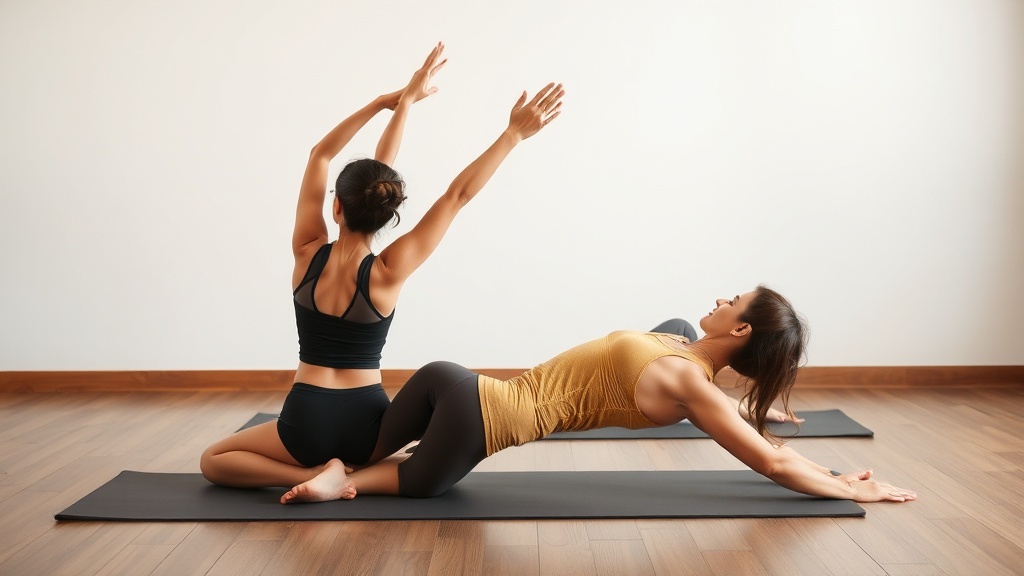
– Over-recruiting superficial muscles: If the upper traps light up during every exercise, focus on lower scapular control and gentle shoulder packing.
– Sacrificing alignment for range: Prioritize control over depth. Reduced range with stable alignment is safer and more effective.
– Moving too quickly: Slow, deliberate repetitions create neuromuscular change; count and tempo matter.
Tips for beginners
– Start with a class labeled “beginner” or a private session to learn core cues and modifications.
– Learn neutral spine and pelvic positioning before attempting advanced movements.
– Use props (small ball, resistance band) to support alignment and proprioception.
– Track progress in functionality—better daily comfort, easier stairs, or improved posture—rather than only counting reps.
Pilates at home
Home practice is effective with consistent short sessions. Focus on a 20–30 minute routine that includes breath work, pelvic neutral, plank variations, hip bridges, and controlled leg circles. Invest in a quality mat and follow reputable guided classes to ensure safe form.
Who benefits most
Pilates works well for desk workers, athletes seeking cross-training, people in rehab, older adults pursuing safe strength, and anyone wanting a sustainable, low-impact routine that improves daily movement.
Getting started
Try a trial class at a local studio or follow a structured online series that emphasizes cueing and progression. Regular practice—two to four sessions per week—creates noticeable improvements in strength, mobility, and posture.
Pilates rewards consistency and attention to detail. With patient practice and good instruction, it becomes a reliable foundation for movement health and long-term resilience.