Pilates: Core Strength, Better Posture, and Practical Tips for Every Level
Pilates is a movement system that emphasizes controlled movement, core stability, and mindful breathing. Originating over a century ago, it has evolved into a versatile practice used for general fitness, rehabilitation, and athletic cross-training. Whether you’re drawn to gentle mat work or high-tech reformer sessions, Pilates helps build functional strength without heavy impact.
Why Pilates works
– Core integration: Pilates trains the deep stabilizers of the torso—often called the “powerhouse”—to support movement and reduce strain on the spine and joints.
– Movement quality: Exercises emphasize precision, control, and flow, improving coordination and body awareness.
– Flexibility and mobility: Controlled stretching and articulation promote joint mobility and balanced flexibility.
– Low-impact conditioning: The practice strengthens muscles without repetitive pounding, making it suitable for people recovering from injury or those seeking joint-friendly workouts.
– Posture and alignment: Regular practice can ease muscular imbalances that contribute to rounded shoulders, anterior pelvic tilt, and neck tension.
Types of Pilates
– Mat Pilates: Uses body weight and small props. Great for beginners and easy to access at home or in group classes.
– Reformer Pilates: Uses a spring-loaded carriage to add resistance and assistance, allowing for a wide range of progressions and regressions.
– Apparatus work: Includes equipment like the Cadillac, Wunda Chair, and barrels for targeted strength and mobility training.
– Fusion classes: Currently, many studios blend Pilates with yoga, barre, or strength training to create varied workouts that meet different fitness goals.
Practical tips for beginners
1. Start with guidance: A session with a certified instructor helps establish safe alignment patterns and personalized regressions.
2.
Focus on breath: Coordinate inhalation and exhalation with movement to enhance core recruitment and fluidity.
3. Quality over quantity: Precise, controlled reps are more effective than fast, forceful motions.
4. Build gradually: Increase resistance or difficulty only after mastering basic control and alignment.
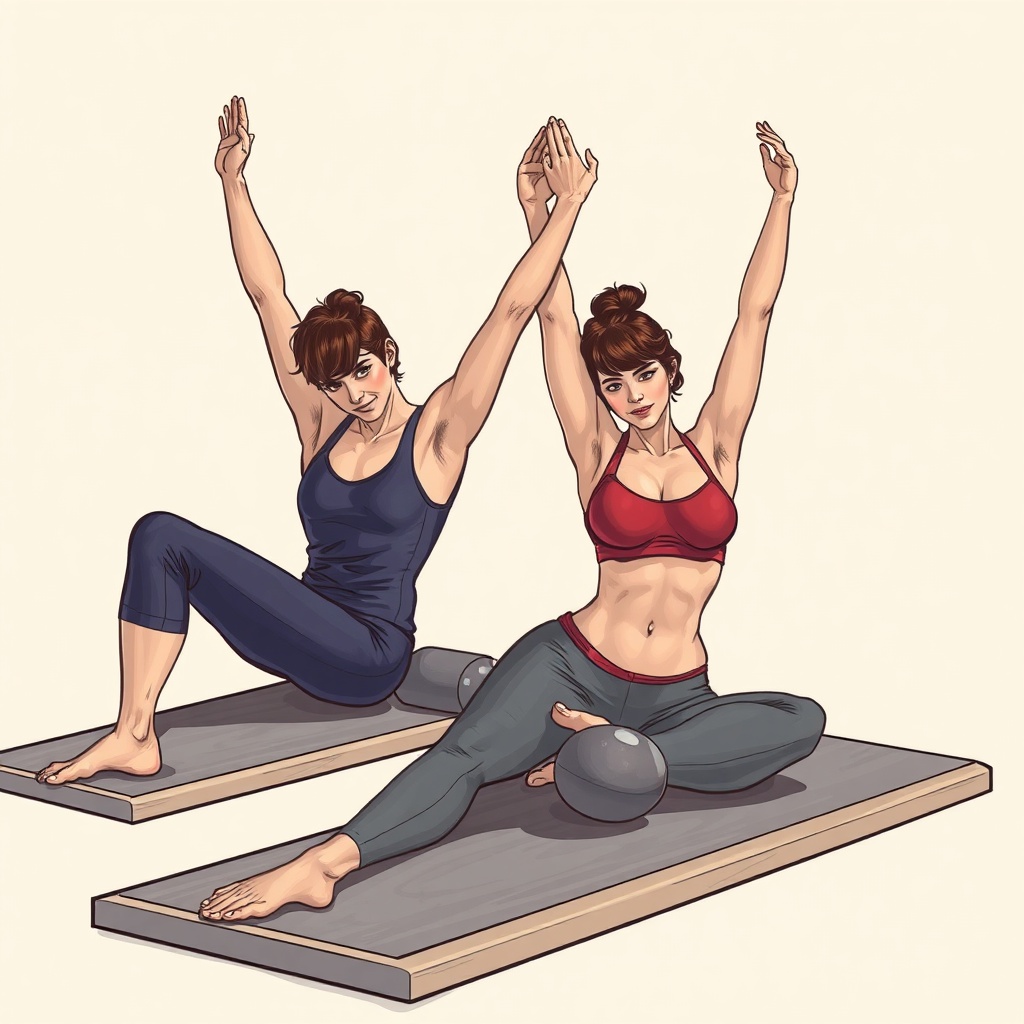
5. Use props wisely: Bands, small balls, and reformer springs help modify intensity—ask an instructor which options suit your needs.
Five beginner-friendly moves
– Breathing with rib mobilization: Lie supine, inhale to expand ribs, exhale to draw ribs and belly toward the spine.
– Pelvic curl (bridging): Articulate the spine off the mat using glutes and hamstrings while keeping the core engaged.
– Shoulder bridge: A variation that reinforces posterior chain strength and spinal articulation.
– Single-leg stretch (modified): In a supported supine position, alternate leg extensions with a stable core.
– Modified plank: Start on knees or elbows, aiming for a straight line from head to hips, breathing steadily.
Common mistakes to avoid
– Holding the breath during effort.
– Overarching the lower back to “feel” a movement.
– Shrugging the shoulders or gripping the neck.
– Moving too quickly rather than using precise control.
Who should be cautious
Pilates is adaptable, but anyone with recent surgery, unstable medical conditions, or advanced osteoporosis should consult a healthcare provider before starting. A trained instructor can provide modifications for pregnancy, chronic pain, or rehabilitation scenarios.
Making Pilates stick
Consistency is key—short, frequent sessions often yield better results than sporadic intense workouts. Mixing mat and reformer work, or combining Pilates with cardiovascular exercise and mobility routines, creates a balanced fitness plan.
Try one well-taught class and pay attention to how your posture, breathing, and movement confidence change. Pilates is a practice that rewards patience and attention to detail, offering durable benefits for strength, mobility, and everyday movement.